World news: Czech patent – Hydrogen virtual reality

World news: Czech patent – Hydrogen virtual reality

A World First: H₂ Global Group Combines Molecular Hydrogen and Virtual Reality for Groundbreaking Therapy

The Ostrava-based company H₂ Global Group is introducing a pioneering innovation that unites the regenerative power of Molecular Hydrogen® with the immersive capabilities of virtual reality.

“The principle is surprisingly simple,” explains David Maršálek, President of H₂ Global Group. “Inhaling molecular hydrogen amplifies the effects of brain-focused therapies conducted within a virtual environment.” This cutting-edge development, now registered as a Czech patent, opens a new chapter in the field of integrative health technology.

Virtual Scenarios That Heal

During therapy, patients are immersed in realistic virtual situations to which the brain responds as if they were real. This immersive experience enhances rehabilitation, helps reduce anxiety and psychological disorders, and can even boost cognitive performance. “The addition of molecular hydrogen significantly intensifies the therapeutic effect,” adds Maršálek.

While virtual reality (VR) is widely associated with gaming or simulated adventures, it has become a vital tool in modern healthcare. The integration of VR with hydrogen inhalation is a global first. As the hydrogen gas enters the bloodstream via the lungs, it is distributed throughout the body—combining with movement to create a powerful therapy suitable for various medical disciplines.

“When immersed in the virtual world, a person focuses entirely on the experience, distancing themselves from external stimuli and entering a space that actively supports healing,” explains VR specialist Dr Jana Trdá.

A World Patent: Virtual Reality Meets Molecular Hydrogen

“Numerous Czech and international studies have confirmed hydrogen’s ability to restore cellular balance disrupted by oxidative stress. It effectively neutralises harmful free radicals,” says David Maršálek.

“The combination of medical expertise, cutting-edge technology, and molecular hydrogen benefits both patients and practitioners. We’ve applied for a Czech patent for this unique therapeutic approach, which we plan to expand globally.”

In collaboration with H₂ Medical Technologies, VR Life has developed a module focused specifically on hydrogen inhalation, compatible with their hydrogen inhalators and generators.

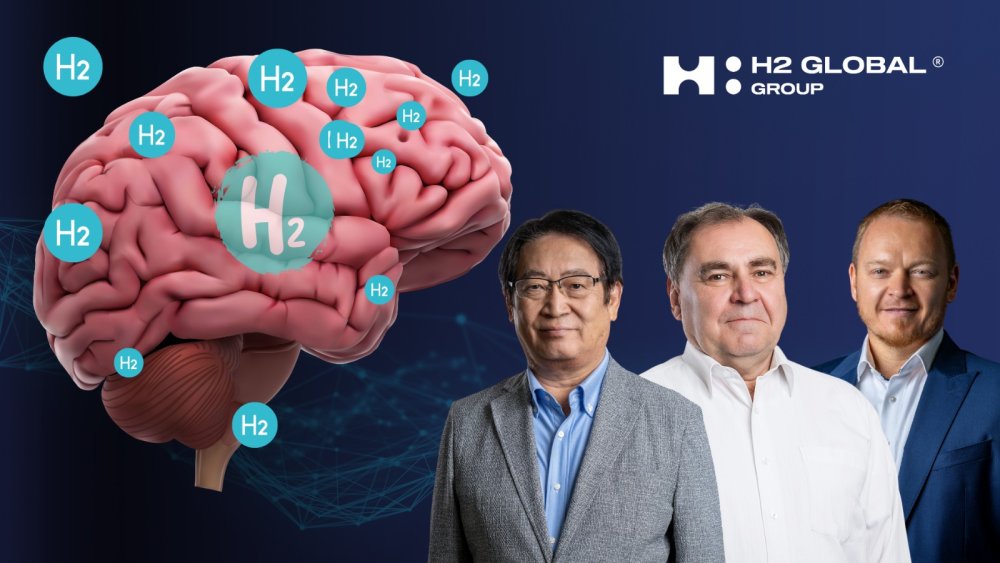
“Studies have shown hydrogen’s positive impact on performance, endurance, and post-exercise recovery,” adds Professor Shigeo Ohta, Vice President for Science and Research at H₂ Global Group. “Inhaled hydrogen from our generators also accelerates regeneration, for example after post-COVID fatigue, and is effective against numerous conditions due to its anti-inflammatory properties. It has shown promising results in patients with Alzheimer’s disease. The combination of hydrogen and VR is certain to bring extraordinary results.”

A Victorian Greenhouse or a Hydrogen-Powered Tent?

Hydrogen VR therapy can be conducted sitting or standing. At the request of H₂ Medical, VR Life designed a bespoke environment in the form of a virtual Victorian greenhouse filled with flowers and soothing nature sounds, simulating warm, humid air.

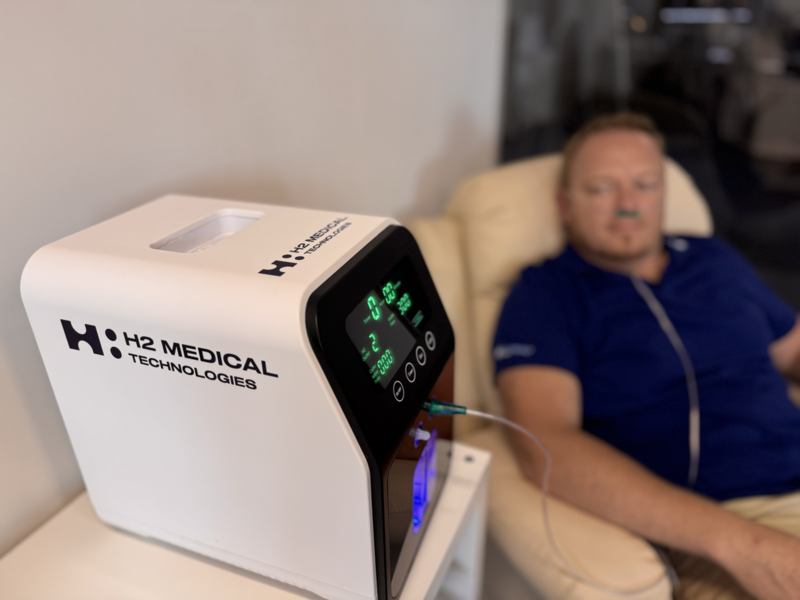
“The patient sees animated lungs expanding and contracting with each breath, encouraging coordinated breathing and effective inhalation of hydrogen,” says Dr Trdá. Seated patients use nasal cannulas for hydrogen inhalation while immersed in this calming visual experience.

“For standing exercises, we developed a hydrogen tent that is enclosed and filled with hydrogen-enriched air, allowing users to move freely during VR therapy,” she explains.

Gamified Healing

A major strength of VR therapy lies in its gamification elements. “We apply game-like mechanics to motivate patients during rehabilitation,” explains Dr Trdá.

Each exercise is designed and validated by a team of doctors, physiotherapists and occupational therapists, ensuring both effectiveness and medical accuracy.

“Patients generally feel more comfortable and are willing to train longer when using VR. We receive videos from clients showing clear progress—like a patient with a shoulder injury struggling to raise their arm during conventional exercise, yet lifting it much higher during VR therapy without even realising it.”

VR therapy has already been shown to support recovery after spinal injuries, surgeries, or strokes. It is also used in psychotherapy for treating phobias, anxiety, depression, and eating disorders. VR is proving to be a powerful tool in therapy for patients with Alzheimer’s disease.

The World’s First VR Hydrogen Park

“Combining virtual reality with molecular hydrogen in healthcare inspired us to create the world’s first H₂ VR Park in Ostrava,” says David Maršálek.

“This will be a place for relaxation and enjoyment for children, adults, and seniors alike. Thanks to virtual reality, visitors will be able to ‘travel’ to the sea, mountains, or even experience skydiving—fulfilling dreams that might otherwise remain out of reach. All of this in one place, safely, and with the added benefits of molecular hydrogen.”

Thanks to the generous support of a local Ostrava investor, H₂ VR Park Ostrava will welcome its first visitors in September 2023. Following the innovative H₂ Bike, the H₂ VR Park is another world-class project based in H₂ City, symbolising Czech innovation on a global scale.

Alzheimer’s Dementia: Genetics play a role!

Alzheimer’s Dementia: Genetics play a role!

H2 Global Group Holds International Patent for Alzheimer’s Therapy Using Molecular Hydrogen

Ostrava-based company H2 Global Group has secured an international patent for the treatment and mitigation of Alzheimer’s disease through a groundbreaking approach combining hydrogen inhalation devices, hydrogen-rich water, and targeted nutritional supplements. Now, the company is integrating this innovation into a new model of personalised healthcare—with a focus on prevention.

Scientists warn that the number of Alzheimer’s cases is rising sharply, and individuals with close family members affected by the disease are up to four times more likely to develop it themselves.

A Czech Breakthrough with Global Potential

Alzheimer’s does not only affect the elderly—changes in the brain can begin as early as age 40, eventually leading to symptoms associated with various types of dementia. A ray of hope for millions around the world may, however, be emerging from the Czech Republic.

H2 Global Group’s patent—developed in collaboration with Japanese researchers—includes a unique combination of molecular hydrogen inhalation via custom-designed generators, drinking hydrogen-rich water, and targeted supplementation. The company is now planning to introduce a digital tool that can help identify individuals with a genetic predisposition, enabling early intervention and shifting the paradigm from treatment to prevention. This aligns with H2 Global Group’s long-term focus on the development of bioactive nutrients for targeted health outcomes.

“Regular hydrogen inhalation using our H2 Vibe devices can not only alleviate symptoms in those already affected but may also prevent onset—if started early enough,” Photo credit: H2 Global Group

From Scientific Discovery to Scalable Innovation

H2 Global Group is committed to bridging the gap between research and real-world impact.

“We are applying our patents in several ongoing projects, which are often demanding in terms of time, resources, and logistics,” explains CEO Viktória Procházková. “But our core mission is not just scientific exploration—we aim to bring innovations to market swiftly, creating immediate value for both existing and new investors. We are soon launching a new two-phase brain nutrient designed to protect and regenerate the brain. Our goal is to engage at-risk individuals early and offer them effective strategies for maintaining cognitive health.”

Renowned Japanese scientist Professor Shigeo Ohta, a global authority on molecular hydrogen and long-term research partner of H2 Global Group, adds:

“We’ve identified oxidative stress and mitochondrial dysfunction as key contributors to Alzheimer’s. Hydrogen reduces inflammation, supports cognitive function, and plays a vital role in neuron protection and disease management.”

“Early detection, risk mitigation, and prevention must become part of our daily lives if we want to maintain a high quality of life without cognitive decline,” says Viktória Procházková.

Alzheimer’s: A Gateway to Innovation

Alzheimer’s affects over 55 million people worldwide, including more than 150,000 in the Czech Republic. Without intervention, these figures are expected to double by 2050.

Because brain damage may begin decades before symptoms appear, early prevention is critical. Regular hydrogen supplementation and a personalised health approach could significantly slow—or even prevent—the onset of disease.

A Future-Focused Investment Opportunity

H2 Global Group’s patented hydrogen-based therapy represents not only a breakthrough in healthcare—but also a compelling investment opportunity in the future of medicine.

“Hydrogen therapy is proving to be a revolutionary method in both prevention and treatment. Thanks to our proprietary technologies, we are now bringing these innovations from the lab into everyday medical practice,”
explains Martin Frais, Director of H2 Invest.

Combining cutting-edge science with a clear market strategy, the company is creating opportunities for investors seeking stable, forward-looking returns in the MedTech and HealthTech sectors—fields with rapidly growing importance and strong social impact.

“Hydrogen-based technologies have the potential to fundamentally transform how we approach treatment and regeneration. Demand is rising among physicians, researchers, and patients alike. This is a unique moment to participate in innovations that are redefining modern medicine. H2 Group is building a high-growth sector with global relevance and long-term investment potential,”
concludes Frais.

H2 Global Group merged with VR LIFE

H2 Global Group merged with VR LIFE

Molecular HydroGEN Investment Group, a subsidiary of the H2 Global Group, has invested CZK 15 million in VR LIFE, acquiring a 20% equity stake in the Czech company known for its cutting-edge medical virtual reality product, VR Vitalis. This strategic partnership follows the recent registration of a joint Czech patent and utility model for the world’s first therapy combining molecular hydrogen inhalation with immersive virtual reality.

“When I first met Dr Jana Trdá to present the idea of combining VR with hydrogen therapy, I didn’t expect rejection—in fact, I knew she was the one person in the Czech Republic with the expertise and vision to make it a reality,” recalls David Maršálek, President of H2 Global Group, of the collaboration’s beginnings in November 2022.
“Thanks to our patent expert, we successfully registered the patent and utility model by the end of June. This bridge investment is a natural next step, reflecting the strong synergy and proven results of our cooperation.”

Through its investment, H2 Global Group is supporting VR LIFE in further developing therapeutic VR environments and applications for rehabilitation, cognitive training, and mental health support.

“We see enormous potential in the combination of virtual reality and hydrogen,” says Květoslav Chytil, Vice President of Investments at H2 Global Group and now a supervisory board member at VR LIFE.
“Like H2 Global Group, VR LIFE is highly innovative. This partnership positions us at the heart of the company’s growth, with strong potential for return on investment.”

VR LIFE’s valuation has skyrocketed from CZK 10 million in 2022 to CZK 75 million in just six months.

“Our partnership is not just about product development—it’s about accelerating global market entry,” adds Martin Frais, Director of Molecular HydroGEN Investment Group. “We’re also seeing growing interest from investors keen to be part of this unique opportunity in the evolving field of health-tech.”

A Therapy Like No Other: VR + Molecular Hydrogen

The partnership is rooted in a patented therapy that combines exercise in virtual reality with 99.9% pure hydrogen inhalation. Hydrogen is delivered through a nasal cannula using generators from H2 Medical Technologies, a member of H2 Global Group.

“Inhaled molecular hydrogen significantly speeds up recovery from conditions like post-COVID syndrome and chronic inflammation,” explains Professor Shigeo Ohta, world-renowned Japanese scientist and Vice President for Science and Research at H2 Global Group.
“Hydrogen’s benefits in treating Alzheimer’s—where H2 Global Group also holds a patent—highlight the vast potential of this therapeutic pairing.”

Patients are immersed in a virtual Victorian greenhouse, designed to evoke the feeling of warm, moist air. As they follow visual cues—such as animated lungs that expand and contract—they synchronise their breathing, optimising hydrogen absorption.

“For standing therapy, we’ve introduced a hydrogen-filled tent that allows freedom of movement within the VR environment,” says David Maršálek. “We’re also preparing to launch home-based physical, rehabilitation and breathing exercises using this method.”
Jana Trdá, PhD, CEO of VR LIFE

VR as a Pathway to Health

In the VR environment, patients enter a fully immersive world, distancing themselves from external distractions. They follow guided exercises designed by a multidisciplinary team of physicians, physiotherapists, and occupational therapists, who also validate the therapeutic protocols.

VR Vitalis and its professional medical version, VR Vitalis Pro, are certified for use across the European Union. These tools support cognitive development, mobility, breathing, relaxation, and postural correction.

Already adopted by major institutions—Lázně Darkov, University Hospital Ostrava, Škoda Auto, and memory centres—the technology is proving effective both in therapy and employee well-being programmes.

“Since 2020, a multidisciplinary team from the Faculty of Medicine at Ostrava University and University Hospital Ostrava has developed VR modules for patients with nervous system and motor impairments,” explains Assoc. Prof. MUDr. Michal Filip, Ph.D., MBA, Head of the Centre for AI, VR and Telemedicine at the Faculty of Medicine, OSU, and neurosurgeon at Tomáš Baťa Regional Hospital in Zlín.
“Nationally supported projects confirm the potential of VR as a complementary therapy for patients of all ages.”

The initiative is backed by the Czech Technology Agency, CzechTrade, Vodafone Foundation, and other organisations. Meanwhile, VR LIFE is also developing Awake, a promising application for use in awake neurosurgical procedures.

Molecular hydrogen streamlines care for rheumatic patients

Molecular hydrogen streamlines care for rheumatic patients

Hydrogen Inhalation Improves Physical Fitness in Patients with Rheumatic Diseases, New Czech Study Shows. A ground-breaking study conducted over nearly two years at Teplice nad Bečvou Spa has shown that molecular hydrogen inhalation significantly improves physical fitness in patients with rheumatic conditions. The research, carried out in collaboration with experts from Palacký University Olomouc, involved 24 patients divided into experimental and placebo groups. Results from the hydrogen group were 50% better than those of the placebo group.

Patients who inhaled hydrogen for 15 consecutive days showed notable improvements in the six-minute walk test, as well as increased comfort during movement and better tolerance to physical exertion and muscle fatigue.

A Controlled, Double-Blind Clinical Study

This prospective, randomised, double-blind, placebo-controlled study aimed to verify the effects of molecular hydrogen inhalation on enhancing physical performance, reducing perceived exertion, and improving autonomic cardiac regulation in patients undergoing standard spa treatment, which included traditional procedures and guided physical activity.

The research was led by Assoc. Prof. Michal Botek, Ph.D., of the Faculty of Physical Culture at Palacký University, which has been researching molecular hydrogen for over eight years. H2 Global Group provided technical support for the study, supplying the hydrogen generators used by participants.

“Our results suggest that hydrogen inhalation leads to a significant improvement in functional status in patients with rheumatic diseases,” said Dr Botek.
“Those who underwent the 15-day treatment showed an average improvement of 93 metres in the six-minute walking test—a 50% increase compared to the placebo group. Participants also reported lower perceived effort during walking and improved autonomic nervous system function.”

Spa Medicine Enhanced by Hydrogen Innovation

“Hydrogen therapy allows us to offer a more advanced form of rehabilitation—one that not only improves fitness but also enhances recovery and overall well-being,” said MUDr. Gabriela Hanslianová, Head Physician at Teplice nad Bečvou Spa.
“The results of the study motivate us to expand the use of this innovative method within spa care.”

Teplice Spa has been using molecular hydrogen since 2020. The current study builds on previous research by Dr Botek, including a 2022 publication demonstrating the beneficial effects of hydrogen inhalation on patients recovering from COVID-19.

Currently, his team is conducting further research at Bludov Spa, examining the metabolic effects of drinking hydrogen-rich water in adolescents with obesity undergoing a four-week programme involving exercise and caloric restriction.

“We’re continuously exploring the broad therapeutic potential of molecular hydrogen, from respiratory parameters to metabolism and physical performance,” says Dr Botek. “We believe its benefits for both spa and exercise-based therapies are far greater than currently realised.”

Hydrogen as a Targeted Antioxidant

“Molecular hydrogen acts as a selective antioxidant that protects cells from oxidative stress and inflammation,” explains Professor Shigeo Ohta, Ph.D., a globally recognised expert in molecular hydrogen and Director of Science & Research at H2 Global Group.
“Its properties make it a powerful tool for reducing chronic inflammation and supporting faster recovery in these types of conditions.”

For the purposes of the study, H2 Global Group provided molecular hydrogen generators, which patients in the experimental group used daily for 15 days. Participants inhaled hydrogen via a nasal cannula for 60 minutes each day, while the placebo group inhaled ambient air. The double-blind protocol ensured that neither the patients nor the spa personnel administering the treatment knew who was receiving hydrogen and who was not—ensuring objective and unbiased results.

Unlocking New Possibilities in Rehabilitation

This study opens up new possibilities for the use of molecular hydrogen in therapeutic protocols, whether through inhalation or hydrogen-enriched water, across a broader range of medical indications. With growing scientific evidence, hydrogen therapy is emerging as a safe and effective tool to support regeneration, mobility, and systemic balance—both in spa environments and beyond.

H2 Global Group
Privacy Overview

This website uses cookies so that we can provide you with the best user experience possible. Cookie information is stored in your browser and performs functions such as recognising you when you return to our website and helping our team to understand which sections of the website you find most interesting and useful.