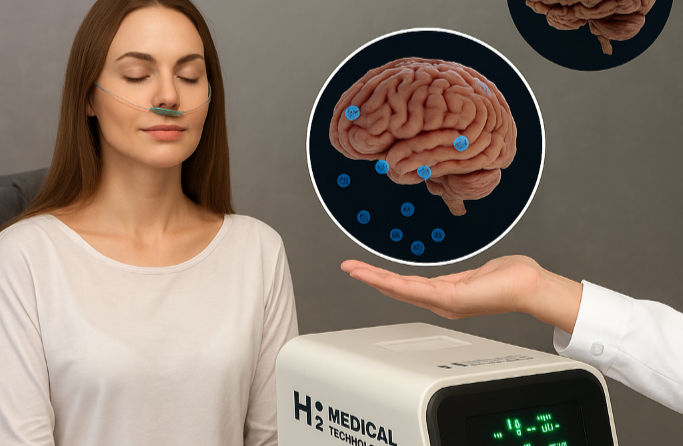
Precisely in this field comes news from the Czech Republic with the potential to place the country on the map of world medicine. The State Institute for Drug Control (SÚKL) has approved the first clinical study in the Czech Republic that will evaluate the safety of inhaling molecular hydrogen in patients with mild cognitive impairment, a frequent precursor of Alzheimer’s dementia. The project is led by the Czech company H2 Medical Technologies, part of the H2 Global Group.
“We want to bring high-quality data and open a discussion about how molecular hydrogen can fit into the medicine of the future. Our solution represents an entirely new, non-invasive, and safe method that has the potential to become an innovative approach, whose effects on neurodegenerative diseases are now the subject of clinical testing,” says PharmDr. Milan Krajíček, Director of Research, Development and Production and co-founder of H2 Global Group.
Why we can no longer afford to wait
The development of Alzheimer’s disease is driven by a combination of factors: older age and genetic load, cardiovascular risks (high blood pressure, diabetes, obesity, smoking), unhealthy lifestyle, lack of movement and sleep, long-term stress, and processes in the brain such as oxidative stress and inflammation. The result is not just “forgetfulness” but a gradual loss of independence and enormous pressure on families and the care system.
“From a neurologist’s perspective, this is no longer just a medical issue, but a major social topic. If we don’t start addressing it actively today, a very difficult future awaits us,” warns Professor MUDr. David Školoudík, Ph.D., a neurologist who will lead this groundbreaking study.
After the COVID crisis, a global “tsunami of demand” is growing for diagnostics and care, specialized beds, trained personnel, and home and community care. Dementia is shifting from a marginal part of geriatrics to the center of social and economic debate for the coming decades.
Molecular hydrogen: a Czech patent with global ambition
Molecular hydrogen (H₂) is a gas naturally occurring in the body that is recently attracted attention from scientists worldwide. Thousands of studies describe its antioxidant, anti-inflammatory, and cell-protective potential and its ability to influence energy metabolism. Experts do not view it as a “miracle drug” but as a modulator of cellular processes and a promising complement to other health-care approaches.
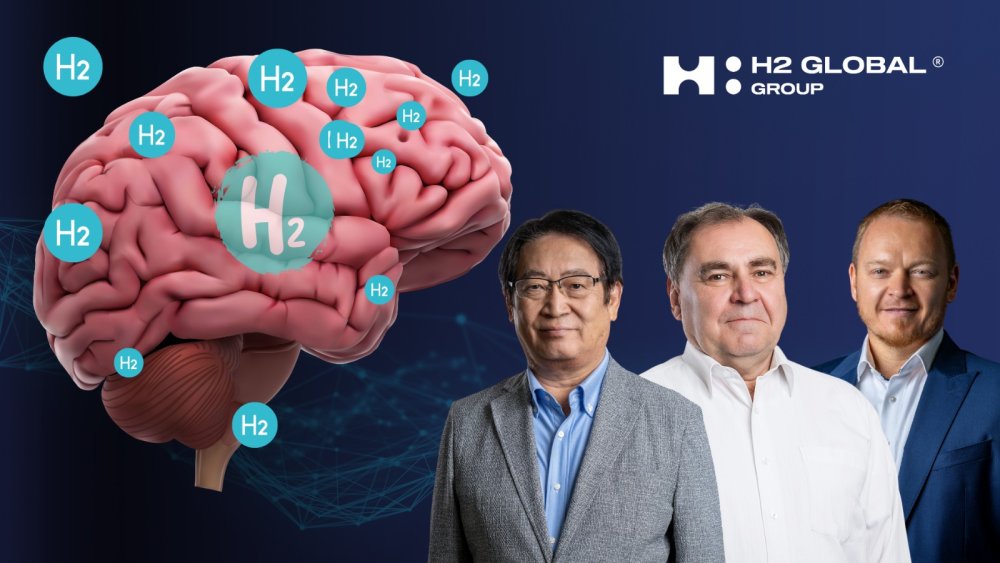
“We see molecular hydrogen as a tool that can gently influence cellular processes. That is why we need more high-quality clinical data to know exactly where it makes sense,” says Professor Shigeo Ohta from Japan, globally regarded as the father and founder of molecular hydrogen research and co-founder of H2 Global Group.
A significant milestone is the European patent EP3701956B1, “Prophylactic or therapeutic agent for dementia”, authored by Professor Ohta and held by H2 Global Group. The patent describes the use of molecular hydrogen in neurodegenerative diseases, including dementias, giving the Czech Republic a unique position on the global scene.
SÚKL-approved clinical study: when science, medicine, and business come together
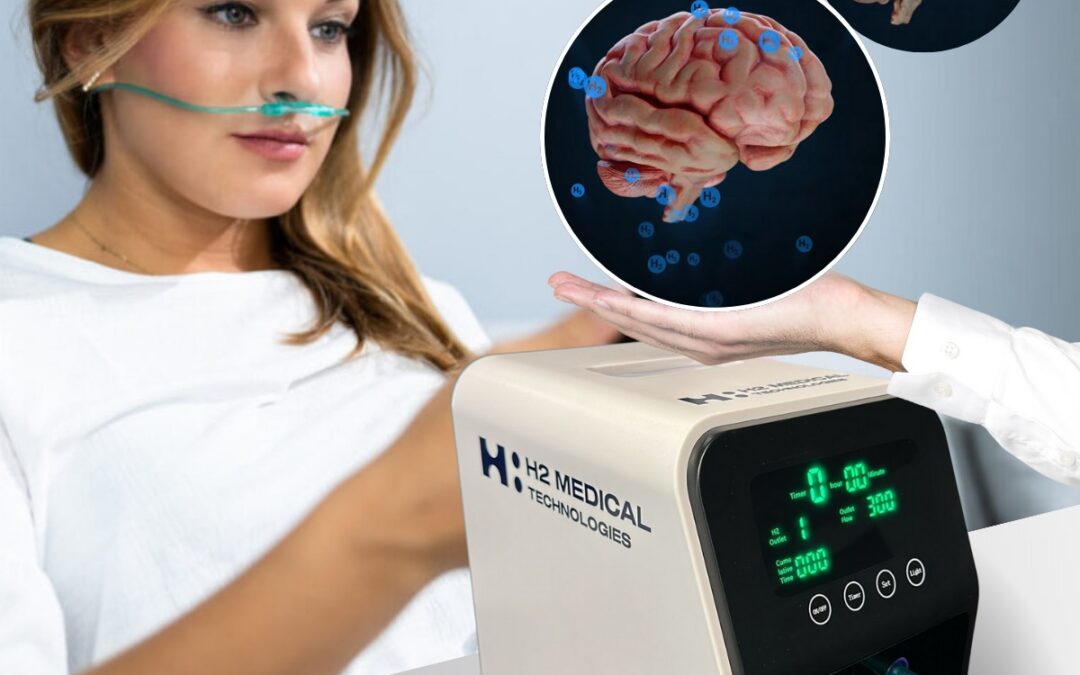
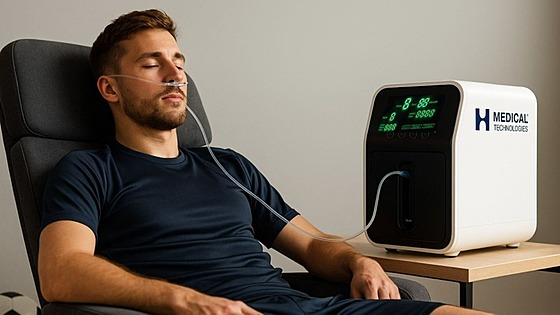
This patent now forms the basis for the first clinical study of its kind in the Czech Republic, approved by SÚKL and the Ethics Committee of University Hospital Ostrava. The study will evaluate the safety of inhaling molecular hydrogen in patients with mild cognitive impairment (MCI). It will begin in January 2026 and last six months. Approximately 30 patients aged 50–80 will participate. They will inhale molecular hydrogen for one hour a day, five days a week, for three months, followed by three months of monitoring, including cognitive tests, selected biochemical parameters, and quality-of-life assessments.
“We don’t want to promise miracles; we want to obtain more data,” summarizes Professor Školoudík. “Only then will we be able to responsibly say what role molecular hydrogen inhalation may have for this group of patients.”
Once evaluated, the results will be published in professional journals and become another step toward making the Czech Republic the birthplace of the world’s first registered medical device using molecular hydrogen.
Call for participation: help yourself, your family, and future generations
H2 Medical Technologies is launching a public call for volunteers who wish to participate in the study and meet basic criteria: age 50–80, overall good health, a diagnosis of mild cognitive impairment, or mild to moderate dementia, and ideally residence in Ostrava or its surroundings. Participation in this study does not guarantee any health benefit and should not be viewed as a substitute for standard treatment. Interested individuals can apply until 23 December 2025 at: david.skoloudik@H2medical.com
H2 Global Group is a medical-technology group that develops, manufactures, and exclusively supplies innovative and safe products and devices using molecular hydrogen. Today, its solutions are used by spas and wellness centers, sports clubs and elite athletes, private clinics, cosmetic and beauty sectors, corporate health-care programs, and increasingly also ordinary households. It collaborates with physicians, therapists, universities, and scientific teams in the Czech Republic and abroad. It holds several patents and utility models and aims to register the world’s first medical device with molecular hydrogen in the Czech Republic, followed by expansion worldwide.
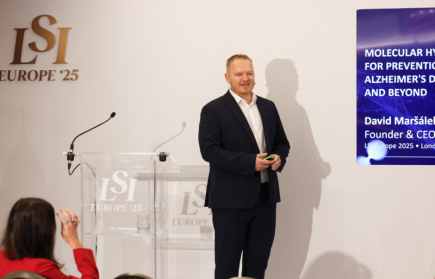
“When you are healthy, you have thousands of problems to solve. When you become ill, only one remains – how to get well,” says David Maršálek, founder and CEO of H2 Global Group, who introduced molecular hydrogen to the Czech Republic—and later other European countries—14 years ago as the world’s first food supplement of its kind. Since then, through ongoing research, development, and new generations of products and devices, molecular hydrogen has entered Czech homes, companies, spas, clinics, and other places where people seek gentle ways to support their health, vitality, and longevity.
“Despite thousands of published studies and expert articles on molecular hydrogen, we must remain humble. Our duty is to distinguish between marketing and real evidence-based medicine,” emphasizes PharmDr. Milan Krajíček. “That is why we invest in regulated research, clinical studies, and cooperation with top institutions,” he adds.
H2 Global Group thus integrates several layers of social responsibility:
– scientific (systematic research and clinical testing),
– ethical (cooperation with SÚKL and ethics committees, emphasis on patient safety),
– economic (the growing market for medical technologies and preventive medicine),
– and local (innovation developed in the Czech Republic but aimed at patients worldwide).
A unique opportunity for investors to be present at the birth of the ‘hydrogen-era medicine’
Alzheimer’s dementia and other cognitive disorders represent one of the largest future markets—not only in medicine, but also in services, technology, and long-term care. Any solution that can improve patients’ quality of life, delay loss of independence, or reduce caregiver burden has enormous social and economic impact.
Many Czech investors have already seized this opportunity by becoming part of H2 Global Group and contributing to the development of the “medicine of the future”. After the COVID crisis, global demand for innovative MedTech and HealthTech solutions has been rising—solutions that make care more efficient, support prevention, and also focus on active longevity, helping people not only live longer but live better. Additional investors can now join at this decisive stage, at the moment when patent-protected know-how, regulated clinical research, worldwide market demand, and Czech technology with global potential meet in a single project—precisely what investors most often seek.
Being there when a new Czech medical story is written
Alzheimer’s dementia dramatically affects the lives of patients and their loved ones, and experts warn that without active solutions, it will become a deep social and economic problem. The H2 Medical Technologies project and the long-term activities of H2 Global Group show that even a relatively small country can generate an initiative that moves global medicine forward and places social responsibility at the heart of business.
“Now is the time to decide who and how will be part of this—whether as an investor, expert, patient, family caregiver, or future user of molecular hydrogen technologies,” concludes Maršálek.
Media & investor contact:
H2 Global Group / H2 Medical Technologies / H2 Investment
www.H2Global.group, www.H2Vibe.cz, www.H2invest.cz