It is a test for families, caregivers, healthcare and social systems – and above all for our ability to deal with vulnerability and aging with dignity.
Facts that cannot be ignored:
• Globally, tens of millions of people are living with dementia, and millions of new cases are diagnosed each year.
• In the EU alone, it affects millions of people – and with demographic trends, the numbers will continue to rise.
When public figures speak openly about dementia, it often helps to:
reduce stigma and taboo,
increase willingness to seek help,
make the reality of caregiving – which is often invisible – more visible.
What does “social responsibility” mean in practice?
Talking about dementia without sensationalism or labels (and explaining the differences – dementia ≠ a single disease).
Supporting caregivers: workplace flexibility, respite services, counseling, and community support.
Supporting research – while remaining realistic and fair in expectations.
In the Czech Republic, further clinical research is also underway (including a clinical study in Ostrava focused on the safety of non-invasive inhalation of molecular hydrogen in people with mild cognitive impairment, which often precedes Alzheimer’s dementia).
You can find the article below and also in the comments. If it resonates with you, feel free to share it – perhaps with someone who is caring for a loved one.
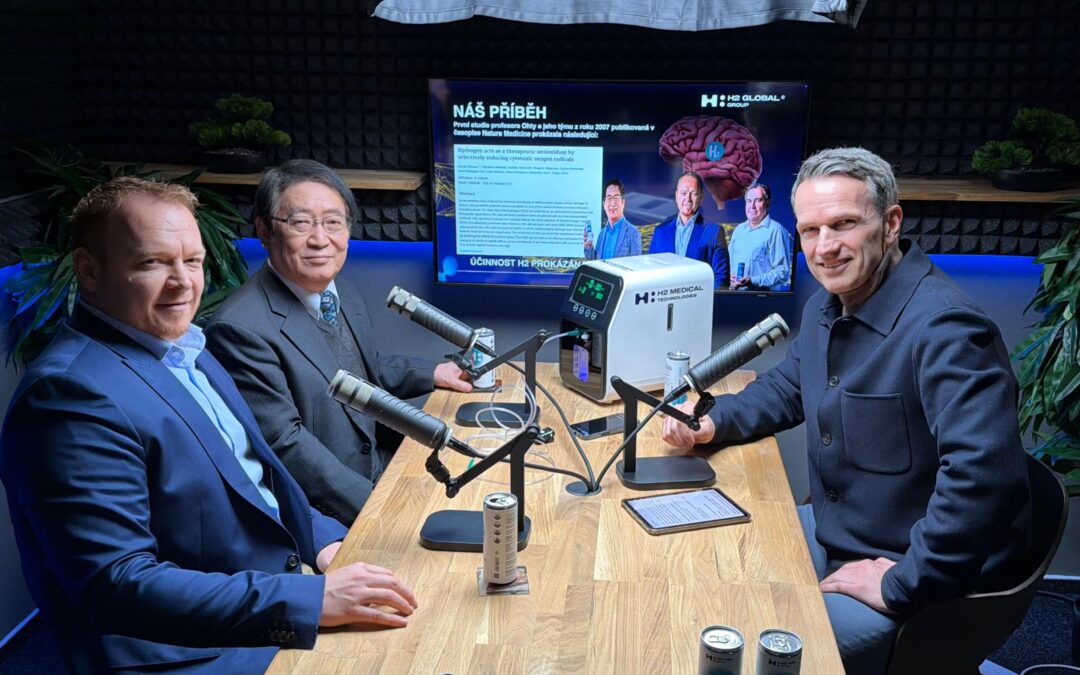
In this episode, Prof. Shigeo Ohta and David Maršálek, founder of H2 Global Group, return to the beginning of their “hydrogen” journey. Ohta describes how his academic research gradually led him to the long-term study of molecular hydrogen and why he sees it as a meaningful direction for modern medicine.
Maršálek follows with his personal story — from a key meeting in the United States with his first hydrogen mentor, Prof. Dušan Miljkovič, which launched his many years of work with hydrogen, to building a broader ecosystem around research, development, and clinical validation. The discussion is moderated by Radek Erben, an experienced Czech moderator and lecturer.
The main theme of the conversation is the plan for the future: to move hydrogen from the area of an “interesting supplement” into serious, measurable, and properly regulated medical use worldwide.
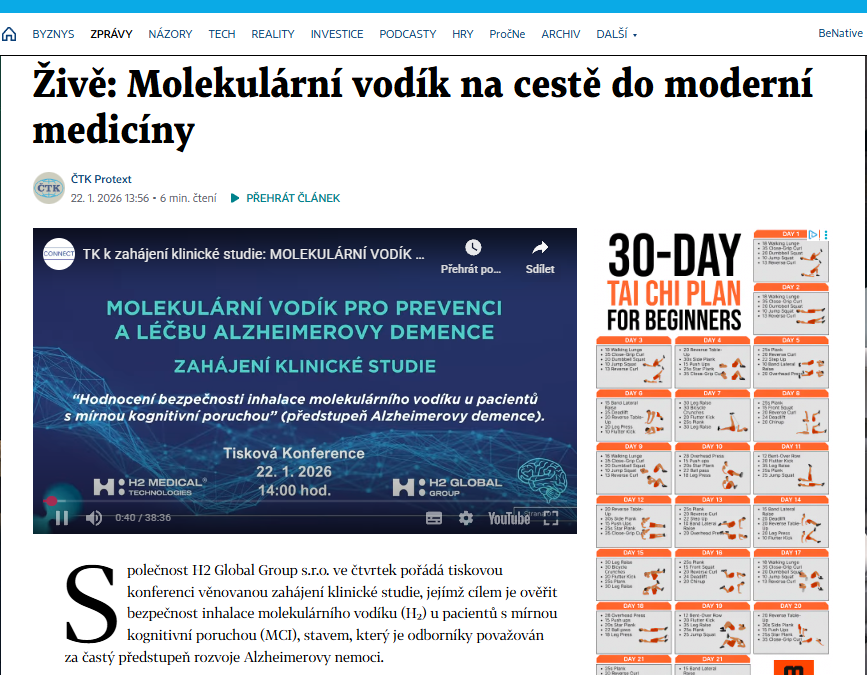
They mention concrete steps, international collaboration between Czech and Japanese teams, and an emphasis on clinical data. A clinical study has just been launched in the Czech Republic aiming to demonstrate the safety of non-invasive inhalation of molecular hydrogen in patients with mild cognitive impairment (MCI), which may precede the development of Alzheimer’s dementia.
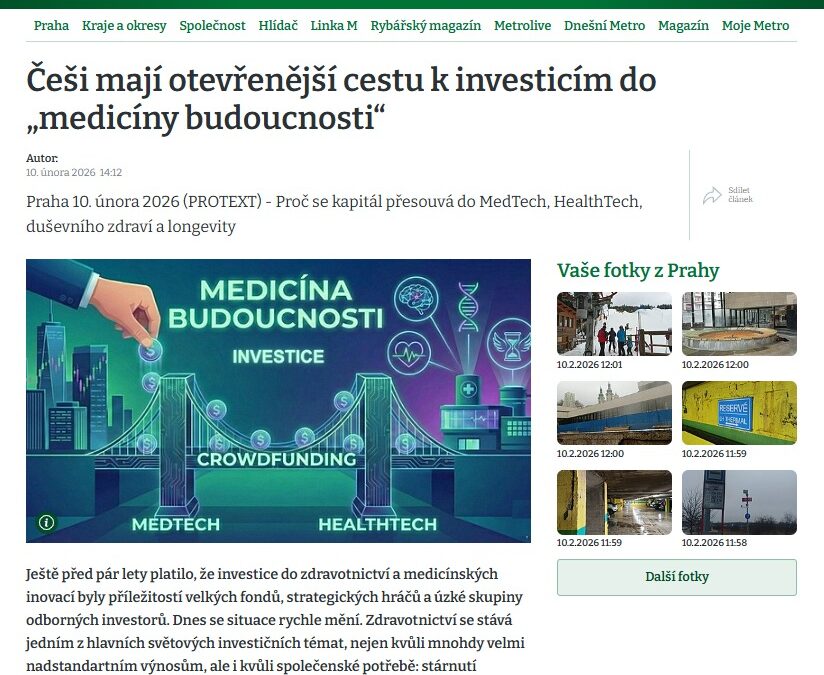
Just a few years ago, investments in healthcare and medical innovation were mainly opportunities for large funds, strategic players, and a narrow group of specialized investors. Today, the situation is changing rapidly. Healthcare is becoming one of the world’s main investment themes — not only because of returns, but also because of social necessity: aging populations, high household and public healthcare spending, shortages in care capacity, and the enormous burden placed on families caring for chronically ill relatives.
At the same time, new pathways are opening that allow a broader investing public to participate in this trend, from equity markets and thematic funds to crowdfunding. The European crowdfunding framework has unified rules across the EU and made this type of financing more accessible to ordinary investors.
Why Now: Illness as the Most Expensive “Hidden Burden” on Society
Healthcare is no longer just a government expense. In many areas, it is becoming strategic infrastructure, similar to energy or transportation. At the same time, it is a sector where failing to address problems becomes extremely costly over time.
A typical example is dementia and Alzheimer’s disease. According to the World Health Organization (WHO), about 55 million people worldwide were living with dementia in 2019/2020, and the total global cost of dementia-related care reached approximately $1.3 trillion in 2019. Roughly half of these costs are associated with informal care — typically family caregiving that can require up to five hours per day.
Alzheimer’s Disease International estimates that the number of people living with dementia could grow almost exponentially: to around 78 million by 2030 and 139 million by 2050. These are not just statistics. Long-term care for a person with dementia often has a different dynamic than, for example, many oncology diagnoses: it involves not only medical procedures but years of supervision related to safety, hygiene, nutrition, orientation in time and space, and the psychological and financial burden on the entire family. This is precisely why governments and healthcare payers (insurers) increasingly prioritize early diagnosis, prevention, and effective — ideally gentle and non-invasive — therapies.
The Czech Reality: Care Capacity Reaching Its Limits
The Czech Republic is no exception. Pressure on the long-term care and social services system has increasingly entered public debate in recent years, partly due to unfavorable demographics and limited capacity.
Czech media warn that without major investments and coordination, access to senior care could worsen over the next decade. Regional forecasts point to a significant increase in the population aged 70+, along with a growing number of younger people with diagnosed and undiagnosed dementia.
This “relentless pressure of reality” is one reason healthcare innovation is attracting investor attention and why support is growing for new care models (home care, telemedicine, digital monitoring), diagnostics, and therapies.
Investors and Pharmaceutical Companies Accelerate: MedTech Acquisitions as a Signal of Change
To understand where the sector is truly heading, investors must follow capital flows from strategic players — large pharmaceutical, medical device, MedTech, and HealthTech companies acquiring innovative solutions.
MedTech acquisitions 2025–2026: billions for technology and devices
Johnson & Johnson acquired Shockwave Medical (intravascular lithotripsy technology for removing arterial plaque) in a transaction worth about $13.1 billion — an example of large players paying for scalable innovation with clear clinical benefits.
Boston Scientific completed the acquisition of Axonics for approximately $3.7 billion (urological and bowel dysfunction treatment, sacral neuromodulation), strengthening its position in a fast-growing medical device segment.
Novo Holdings completed the acquisition of Catalent for roughly $16.5 billion, highlighting the strategic importance of manufacturing capacity and pharmaceutical infrastructure.
Neurology and Mental Health: Strong Investor Interest
After years of caution, the pharmaceutical industry is once again turning toward brain disorders, central nervous system conditions, and mental health. A visible signal is the return of mergers and acquisitions (M&A) in the CNS space.
For example, Johnson & Johnson acquired Intra-Cellular Therapies for approximately $14.6 billion to strengthen its position in treating schizophrenia and neurodegenerative diseases. This is not an isolated case — neurological acquisitions worth tens of billions of dollars took place between 2023 and 2024. In 2025, neurology and mental health confirmed their position as one of the most attractive investment targets. Total M&A value in neurology and psychiatry reached approximately $30.2–30.7 billion in 2025, surpassing oncology for the first time in deal value within the CNS segment.
The reason is both economic and social. Mental illnesses and neurodegenerative diseases are among the most expensive diagnoses. Alzheimer’s disease alone costs global healthcare systems more than $1 trillion annually, and costs are expected to rise significantly as populations age and life expectancy increases.
This shift is changing the investment landscape. Beyond pharmaceuticals themselves, interest is growing in early diagnostics, biomarkers, specialized centers, and long-term care. Similar to oncology 10–15 years ago, neuroscience is becoming a new strategic field where social need meets long-term financial potential.
The Ecosystem Connecting Innovators and Capital: LSI and Similar Platforms
Another important change is infrastructural: organizations and platforms are emerging that systematically connect innovators with investors, strategic partners, and experts.
One example is Life Science Intelligence (LSI) in the United States, which provides MedTech research and networking infrastructure and organizes conferences focused on partnerships between research and capital.
Such platforms accelerate the market — startups reach investors faster, corporations gain access to innovation more quickly, and investment opportunities become clearer even for retail investors who follow the sector long term.
HealthTech, Prevention, and Longevity: Investing in Not Getting Sick
Healthcare is increasingly shifting toward prevention. With this shift, the importance of the “longevity” market is growing — longer independence, prevention of chronic disease, and dignified aging.
From an investment perspective, capital is returning to these areas. According to Rock Health, U.S. digital health startup funding reached approximately $14.2 billion in 2025, with the end of the year bringing the highest quarterly activity since mid-2022.
Crowdfunding in Healthcare: An Accessible Form of Financing
For Czech investors, the key development is the expansion of entry points into the healthcare sector. One of these is crowdfunding and investment platforms.
Crowdfunding is a method of raising money for projects, products, or businesses from a large number of people, usually via online platforms. It can replace traditional bank loans and institutional investors, while investors often receive rewards, equity, or interest. The European Union has introduced a unified regulatory framework for crowdfunding providers, harmonizing rules across member states.
Social Responsibility and Investing: Why People Care More About Where Their Money Goes
Public debate is evolving. Many investors now consider not only returns but also impact — whether capital flows into arms manufacturing, speculative assets, or areas that directly improve quality of life and reduce future costs for governments and families.
Healthcare is unique in this respect: effective prevention, diagnosis, and treatment mean fewer years of dependency, less caregiver burnout, and reduced pressure on public budgets. In dementia care, this argument is particularly strong due to high long-term care costs and the large share of informal family caregiving.
Conclusion
Healthcare is becoming a key investment theme because it combines three powerful forces: demographics, technological advancement, and the economic reality of chronic and long-term disease costs. Major MedTech and biopharma acquisitions, regulatory milestones in Alzheimer’s treatment, and renewed capital flows into digital health show that this is not a short-term trend but a structural shift.
For Czech investors, access to this trend is more open than ever — through public markets, funds, and regulated platforms. The challenge (and opportunity) is to approach healthcare investing with data, patience, and long-term vision.
About the Author David Maršálek is the founder and owner of H2 Global Group, focusing on the use of molecular hydrogen primarily in healthcare and on connecting capital with innovation in MedTech, HealthTech, and long-term care. He has also worked for several years on investment strategies in sectors with high social impact, particularly prevention, diagnostics, and modern healthcare delivery models. His work focuses on analyzing global healthcare trends and making investment opportunities more accessible to a broader investor community.
Dementia and neurodegenerative diseases are among the greatest challenges of modern medicine today. They affect tens of millions of people worldwide, and their impact is not only medical but also social and economic. The global cost of caring for patients with dementia amounts to trillions of dollars annually and continues to rise as life expectancy increases.
For this reason, global medicine is increasingly focusing on early stages—phases where it is possible to work with safe, simple, and non-invasive approaches that have the potential to improve quality of life while meeting strict regulatory requirements. MCI represents one of these key intervention points.
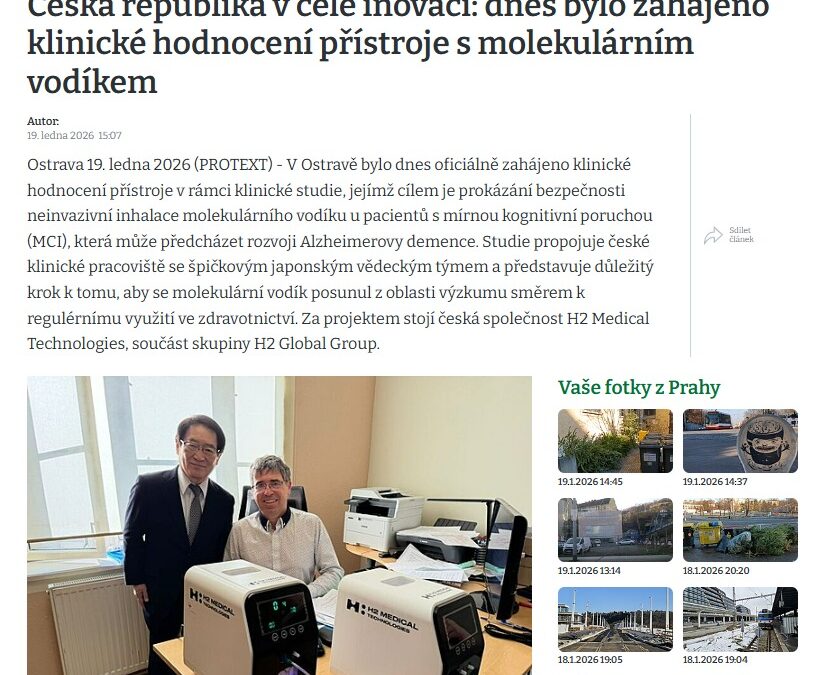
Today in Ostrava, the clinical evaluation of the device was officially launched as part of a clinical study aimed at demonstrating the safety of non-invasive inhalation of molecular hydrogen in patients with mild cognitive impairment (MCI), which may precede the development of Alzheimer’s dementia.
The study connects a Czech clinical site with a top-tier Japanese scientific team and represents an important step toward moving molecular hydrogen from the realm of research into legitimate use in healthcare.
The project is led by the Czech company H2 Medical Technologies, part of the H2 Global Group.
We would like to thank all partners and teams who are part of this milestone.
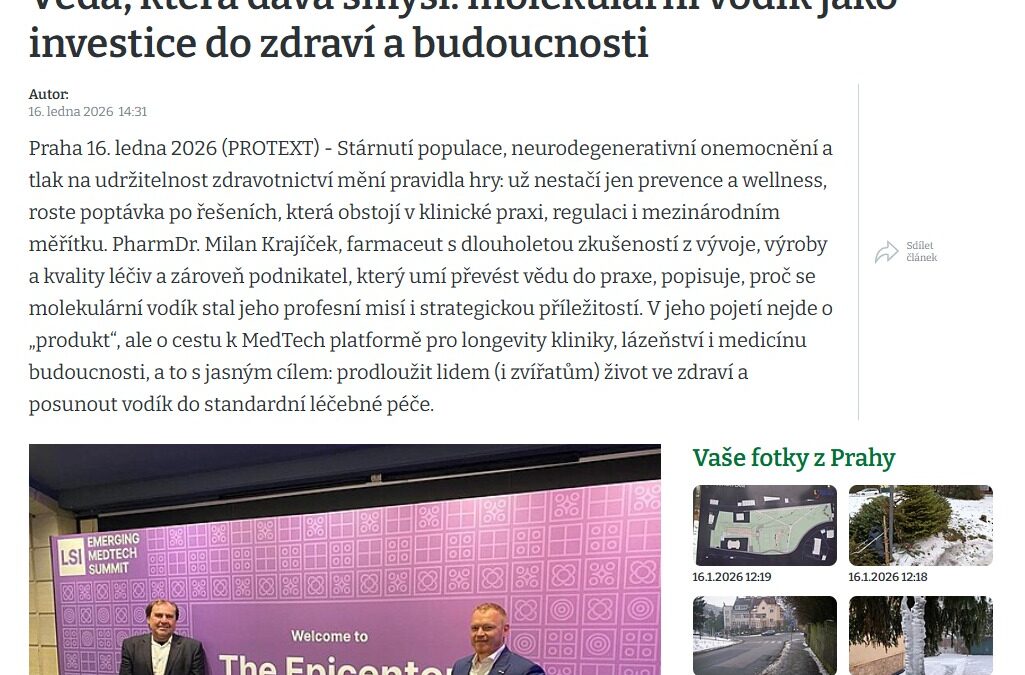
PharmDr. Milan Krajíček is a pharmacist and entrepreneur who has spent his entire life combining rigorous expertise, regulatory discipline, and the ability to turn ideas into practice—with a single goal: to ensure that science truly serves people. In the article, he explains why he has devoted years to molecular hydrogen and why he now sees it not as a product, but as a pathway to the medicine of the future, longevity, and measurable impact—as well as an exceptionally attractive opportunity for investors and strategic partners.